Why Most Ads Are Forgotten Within 24 Hours (And How to Make Yours Unforgettable)
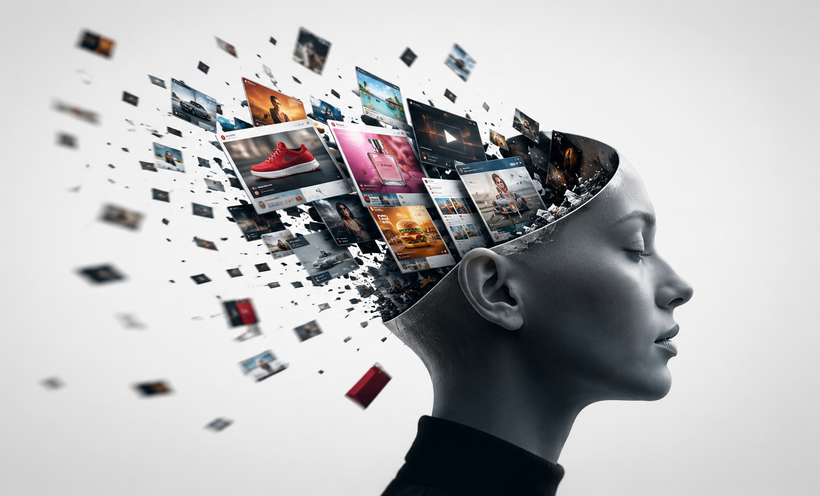
You scroll. You click. You forget.
By tomorrow, that clever ad you saw this morning? Gone. Vanished from memory as if it never existed.
Here's the uncomfortable truth: only 17% of shoppers can confidently recall the last three ads they saw within 24 hours. Nielsen's research shows that about 50% of advertising memories are lost in the first day alone, with the steepest drop happening immediately after exposure.
If you're spending your marketing budget on ads that disappear from people's minds by lunchtime, you're not building a brand. You're burning cash.
But here's the good news: the brain can be trained to remember. With the right strategy, your ads can break through the noise and stick long after the 24-hour cliff.
In this deep dive, we'll uncover:
- Why most ads are forgotten within 24 hours
- What the science of memory tells us about advertising
- How to make your ads unforgettable (with real examples)
- Where [The Kite flyers] can help you build campaigns that last
Let's get into it.
The 24-Hour Memory Cliff: What the Data Says
The Numbers Don't Lie
The statistics around ad recall are sobering—almost alarming.
- 80% of advertising messages are forgotten within a single day.
- Less than 16% of advertisements are recalled and correctly attributed.
- Only 17% of consumers feel confident they can name the last three ads they saw within 24 hours.
- Most people remember only 1–10% of the ads they've seen in the past day.
- 41% of survey respondents can only recall 1% to 10% of the commercials they see daily, demonstrating the recall collapse that accompanies ad overexposure.
This isn't a creative problem. It's a memory problem.
The Ebbinghaus Forgetting Curve
In the 1880s, psychologist Hermann Ebbinghaus discovered that people forget roughly 70% of new information within 24 hours if it isn't reinforced. Advertising is "new information" loaded into an already overloaded brain, so it decays especially fast unless something special happens.
Nielsen's research confirms this pattern for ads:
- Memory decay is steepest in the first 24 hours.
- After that, the curve flattens; what survives the first day tends to persist.
- Repetition helps create durable memories over time.
Translation: If your ad doesn't survive Day 1, it's probably never going to stick.
Why Your Brain Is Designed to Delete Ads
- Attention Is Too Short for Memory Encoding
Memory doesn't form without attention, and most ads don't get enough.
- The average digital ad gets just 1.3 seconds of attention, below the 2–3 seconds typically needed for memory encoding.
- Over 60% of ads are seen but never remembered.
- Our brains are wired to ignore what feels like "noise." When bombarded with pop-ups, banners, and autoplay video, people focus only on what feels essential and skip the rest—a phenomenon known as ad blindness or banner blindness.
If an ad never passes the attention threshold, it never gets stored in memory in a durable way.
- Cognitive Overload: Too Many Concepts, Too Little Time
Our conscious working memory is limited. Ads that try to communicate too much at once get pruned by the brain.
- Research shows that our brains can't deal with too many concepts at once, so elements that don't make it into conscious attention get forgotten.
- When an ad is emotionally charged or highly relevant, attention gets drawn to those bits—and other elements (like the brand name or key message) can be crowded out.
- The brain also needs time (about half a second) to create a conscious understanding of something; many ads move on before that processing completes.
Result: viewers may feel the ad, but can't name the brand or the offer later.
- Irrelevance, Mistrust, and "Clickbait Fatigue"
Even when people look at an ad, they may actively reject it.
Adobe's 2026 Brand Recall Report found three major reasons ads fail to stick:
- Irrelevance – cited by 71% of respondents as a reason ads are forgotten.
- Clickbait or misleading content – 56%.
- Lack of trust in the advertiser – 55%.
When an ad feels irrelevant, manipulative, or untrustworthy, the brain tags it as "not worth storing."
The Science of Memory: What Actually Happens in the Brain
Explicit vs. Implicit Memory
Nielsen breaks advertising memory into two types:
- Explicit memory: Information we're consciously aware of (facts, events we can recall)
- Implicit memory: Information we're not consciously aware of, but that still affects behavior
Explicit memory can be further divided into:
- Episodic memory: Memory of a specific event (e.g., "I saw that ad during the Super Bowl")
- Semantic memory: General knowledge about a brand (e.g., "Coca-Cola is refreshing") without recalling how you learned it
Most ads aim for episodic recall, but what often survives is implicit association (a feeling, a mood, a vague sense of familiarity).
The Role of Emotion
Here's where it gets interesting: emotion encodes memory.
- Research suggests that when messages are emotionally encoded, ad retention "skyrockets."
- Emotion activates brain regions that strengthen memory encoding, makes ads more fluent and more likely to be shared, and creates personal relevance.
- As one expert puts it: "Within 24 hours, it's likely that the rational message is forgotten, and only the feeling remains."
So ads that make people feel something (amused, moved, inspired, even surprised) have a better chance of leaving a trace.
How to Make Your Ads Unforgettable: 7 Proven Strategies
- Tap Into Emotion
Emotion makes things more likely to be remembered, processed, stored deep in memory, then recalled.
Examples:
Budweiser's "Puppy Love" (2014 Super Bowl): A heartwarming tale of friendship between a Labrador puppy and a Clydesdale horse became the most shared Super Bowl ad ever.
P&G's "Thank You Mom": Showcasing the daily sacrifices mothers make to support their kids' athletic dreams, this campaign put P&G at the center of an unbreakable emotional bond.
Actionable tip: Build your ad around a single emotion: joy, curiosity, tension, or even nostalgia. Don't try to make people feel everything at once.
- Provide Incomplete Information (The Zeigarnik Effect)
The Zeigarnik effect is the principle that incomplete information is more likely to be recalled, not less.
Consumers remember things they have to engage with and think about. Leaving a little mystery can make your ad more memorable.
Example: A teaser campaign that hints at a product launch without revealing the full details can create curiosity and anticipation.
- Be Unexpected (Surprise Intensifies Emotion)
Unexpectedness is even more powerful in creating emotions and attention, with surprise intensifying emotions up to 400%.
This is because the nucleus accumbens (the brain's pleasure center) fires more when a pleasure is unexpected.
Example: Old Spice's "The Man Your Man Could Smell Like" campaign placed a suave, shirtless spokesman in increasingly absurd scenarios, spinning a silly yet epic yarn that became iconic.
Actionable tip: Make your ad look different from what people expect. Contrast grabs attention faster than polish.
- Tell a Joke (Humor Is a Memory Shortcut)
Just like unexpectedness, laughter is an intense, positive emotion that shortcuts attention into deep memory.
32% of consumers said they remembered an ad because it made them laugh.
Humorous content is recalled and retained 50% better vs non-humorous content.
Example: Indoeskrim's absurdist take on local folklore gained viral popularity across the region, while M1's "You deserve better" spot is still recalled years later.
- Use Rhythm and Rhymes (Jingles Still Work)
Rhymes and rhythmic language create a double link in memory.
The rhyme-as-reason effect means people believe information that rhymes simply because it rhymes.
Jingles come with a free frequency boost because people repeat them to themselves.
Example: MasterCard's "Priceless"campaign used a warm montage of family moments set to a lilting melody. At its peak, 98% of Americans knew of the campaign.
- Create Mental Hooks (Unique Phrases, Bold Visuals)
A unique phrase, bold visual, or funny line can make your brand memorable long after the scroll ends.
Examples:
Nike's "Just Do It"
Wendy's "Where's the beef?"
Milk's "Got Milk?"
Actionable tip: Develop a distinctive brand voice that comes through in every ad. Consistency builds memorability.
- Repeat the Message (Frequency Builds Recall)
Repetition is the most important variable for creating memories.
Respondents reported needing to encounter a given message at least four times within 24 hours before it became memorable.
If you're not tired of saying it, your audience hasn't heard it enough.
Actionable tip: Run your ad a lot, over and over or create an ad that repeats itself in a creative, interesting, unique way.
Platform and Format Matter: Where Ads Stick (and Where They Don't)
According to Adobe's 2026 report:
YouTube: 46%
Cable/Streaming TV: 40%
Instagram: 27%
TikTok: 25% (but 115% more likely to drive long-lasting impressions for Gen Z)
Top Formats for Memorable Ads
Short-form video: 52% (73% more likely to be remembered vs static images)
Static images/photography: 30%
Long-form video: 27%
Text-based search ads: 25%
Influencer endorsements: 24%
Key takeaway: Dynamic, engaging formats on platforms where people are already attentive have a better shot at surviving the 24-hour window.
The Kite Flyers, Approach: Building Campaigns That LastAt The Kite Flyers, we don't just create ads. We create memories.
Our integrated approach ensures your brand doesn't just get seen—it gets remembered.
How We Help
Brand & Communication
We build distinctive brand voices that cut through the noise. From positioning to messaging, we ensure your brand has a clear, memorable identity that resonates across all touchpoints.
Content Development
Our content strategists craft emotionally encoded messages that stick. Whether it's a blog, video script, or social post, we ensure every piece of content serves your brand's memory-building goals.
Video Production
Short-form video is the most memorable format (52%). Our video production team creates visually arresting, emotionally charged content that stops the scroll and stays in memory.
Social Media Marketing
We leverage platform-specific strategies to maximize recall. From TikTok to YouTube, we optimize your content for the platforms where your audience is most attentive.
Performance Marketing
We combine creative excellence with data-driven optimization. Our performance marketing campaigns are designed not just for clicks, but for long-term brand recall.
Thought Leadership Marketing
We position your brand as a trusted authority in your industry. Thought leadership content builds semantic memory, the general knowledge about your brand that persists even when episodic recall fades.
Event & Conferences
Live events create episodic memories that are far more durable than passive ad exposure. We design immersive experiences that embed your brand in people's minds.
Web & Mobile App
Your digital presence is often the first (and lasting) impression. We build memorable, user-centric experiences that reinforce brand identity at every interaction.
Channel Marketing
We help you create consistent brand experiences across retail, distribution, and partner channels—ensuring your message sticks at every touchpoint.
Employer Branding
Your employees are your best brand ambassadors. We craft employer narratives that make your company unforgettable to top talent.
Recruitment Marketing
We design recruitment campaigns that don't just attract applicants—they create lasting impressions that turn candidates into advocates.
Product & Services Go-To-Market
Launching a new product? We build go-to-market strategies that ensure your offering is remembered from day one.
Strategic Sales Enablement
We equip your sales team with memorable messaging and tools that help them close deals by staying top-of-mind.
Marketplace Management Services
From Amazon to Flipkart, we optimize your marketplace presence to ensure your products stand out and stick in shoppers' minds.
The Bottom Line: Stop Chasing Impressions, Start Building Memories
Most founders chase impressions, clicks, and reach. But their brands vanish from people's minds moments later.
The hard truth: You don't have a traffic problem. You have a memory problem.
If your ads aren't surviving the 24-hour cliff, you're not building a brand. You're renting attention.
At The Kite Flyers, we help you shift from "How many people saw my ad?" to "What will people remember tomorrow?"
Ready to Make Your Brand Unforgettable?
If you're tired of ads that disappear by tomorrow, let's talk.
The Kite Flyers specialises in building memorable, emotionally resonant campaigns that stick.